
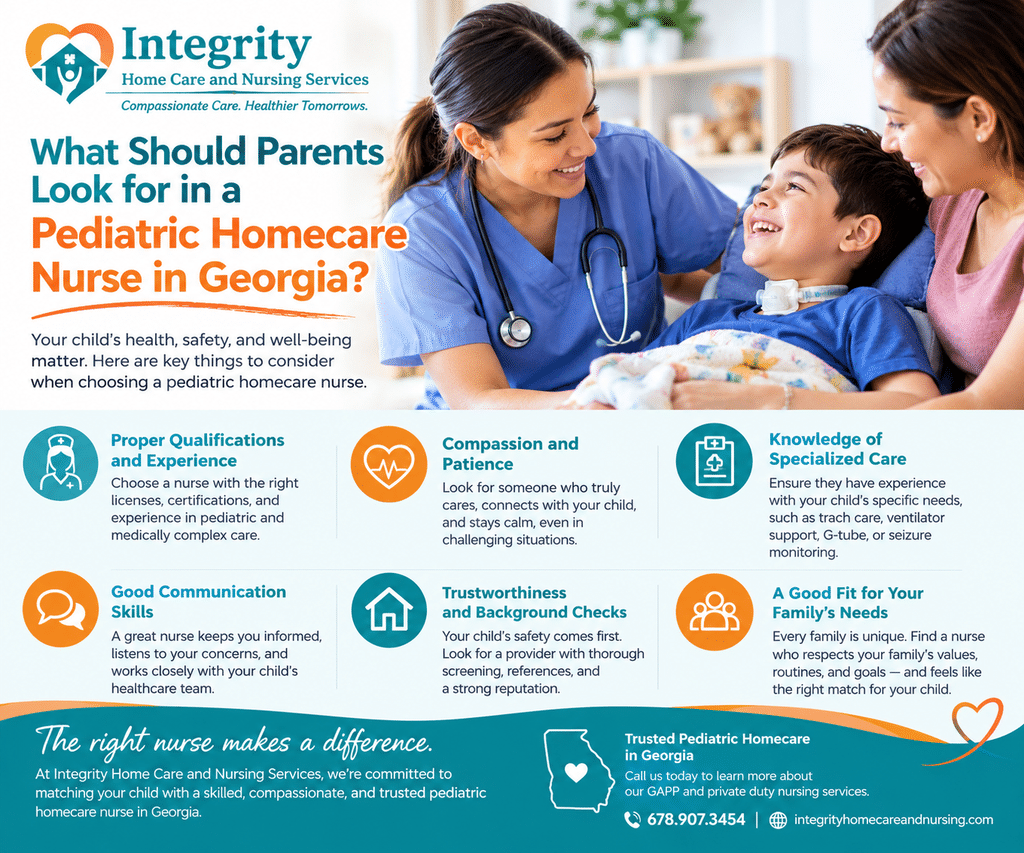
Choosing the right pediatric homecare nurse is an important decision for parents of medically fragile children. When a child requires skilled nursing care at home, families want a qualified, compassionate, and dependable professional who understands their child’s medical needs and provides safe, individualized care.
A pediatric homecare nurse does more than perform medical tasks. The nurse also works closely with parents, follows the child’s care plan, monitors changes in the child’s condition, and helps maintain a comfortable home environment.
At Integrity Home Care and Nursing Services, we understand how important it is for parents to feel confident in their child’s nursing care. Knowing what to look for can help families make informed decisions when exploring pediatric home healthcare and Georgia Pediatric Program (GAPP) services.
1. Proper Licensing and Qualifications
One of the first things parents should consider is whether a pediatric homecare nurse has the appropriate license, qualifications, and training.
Depending on the child’s medical needs and authorized services, care may be provided by a Registered Nurse (RN) or Licensed Practical Nurse (LPN). Each nursing professional must work within their applicable scope of practice and the child’s authorized care plan.
Parents can ask whether the nurse has the credentials and experience needed to provide their child’s specific nursing services.
2. Experience With Pediatric Patients
Caring for children requires specialized knowledge and a patient, compassionate approach. Pediatric nurses must understand that children have different medical, developmental, and emotional needs than adults.
When evaluating a pediatric homecare nurse, parents should consider experience with children who have similar medical conditions or care requirements.
For example, some medically fragile children may need assistance with:
- Tracheostomy and ventilator care
- G-tube feeding and nutritional support
- Seizure monitoring
- Medication administration
- Respiratory care and monitoring
- Neurological or genetic conditions
- Monitoring vital signs and changes in health
A nurse with relevant experience may be better prepared to follow the child’s care plan and recognize when a concern requires further attention.
3. Strong Communication Skills
Clear communication between parents and nurses is essential for successful home healthcare. Parents should feel comfortable sharing information about their child’s routines, symptoms, medications, and daily care needs.
A good pediatric homecare nurse should listen carefully, explain care procedures clearly, and communicate concerns promptly.
Parents should also understand how to contact the nurse or agency when they have questions. Open communication helps families stay informed and participate actively in their child’s care.
4. Compassion, Patience, and Understanding
Children with complex medical needs often require additional attention, reassurance, and emotional support. Therefore, compassion and patience are important qualities in a pediatric homecare nurse.
Parents should look for a nurse who treats their child with kindness, dignity, and respect. A compassionate nurse understands that every child has a unique personality, comfort level, and set of needs.
Building a positive relationship can help children feel more comfortable during nursing visits and help parents feel more confident about the care provided in their home.
5. Ability to Follow the Child’s Individualized Care Plan
Every medically fragile child has different healthcare needs. A qualified pediatric homecare nurse should understand and follow the child’s established care plan, physician orders, and authorized nursing services.
This may include administering medications, monitoring symptoms, providing prescribed treatments, assisting with feeding, and documenting care as required.
Parents should ask how the nurse receives care instructions and how the agency communicates changes to the care plan.
Following the established care plan helps promote consistency and supports the child’s safety and well-being.
6. Dependability and Consistent Scheduling
Reliable nursing support can make a significant difference in a family’s daily routine. Parents may depend on scheduled nursing hours to manage work, appointments, other children, and household responsibilities.
When considering a pediatric homecare provider, ask about scheduling procedures, attendance expectations, and how the agency handles unexpected absences.
Although staffing availability can affect scheduling, clear communication and appropriate coordination help families plan ahead.
For children receiving services through Georgia’s Pediatric Program (GAPP), actual nursing hours depend on the child’s approved services and authorization.
7. Knowledge of Safety and Emergency Procedures
Safety should always be a priority when choosing a pediatric homecare nurse. Parents should confirm that the nurse understands the child’s medical risks, prescribed treatments, and emergency procedures.
Depending on the child’s condition, this may involve recognizing breathing difficulties, responding to seizures, monitoring changes in vital signs, or managing specialized medical equipment.
Parents should also understand the child’s emergency plan and know when to contact emergency services.
A prepared nursing team can help families understand the appropriate steps to take when a medical concern arises.
8. Respect for Family Routines and Home Environment
In-home nursing takes place in a family’s personal space. Therefore, parents should look for a nurse who respects household routines, privacy, cultural preferences, and family boundaries.
A professional pediatric homecare nurse should maintain appropriate boundaries, protect confidential health information, and work collaboratively with parents and other authorized caregivers.
Respect for the family environment helps create a positive working relationship and supports a more comfortable homecare experience.
9. A Supportive Homecare Agency
Choosing a qualified nurse is important, but the homecare agency also plays a key role in supporting the family.
Parents should look for an agency that provides clear communication, appropriate nurse oversight, and a process for addressing questions or concerns.
Before starting services, families can ask:
- Who should we contact if we have concerns about our child’s care?
- How does the agency handle nursing absences or scheduling changes?
- How are changes in our child’s medical needs communicated?
- What should we do if the assigned nurse is not a suitable fit?
- How does the agency help ensure that nursing services follow the child’s care plan?
A responsive agency can help families navigate the practical aspects of arranging and maintaining pediatric home nursing services.
10. Familiarity With Georgia’s Pediatric Program (GAPP)
For eligible children in Georgia, the Georgia Pediatric Program (GAPP) provides access to authorized in-home skilled nursing services when medically necessary.
Parents exploring GAPP nursing should understand that eligibility, covered services, nursing hours, and authorization depend on applicable Georgia Medicaid requirements and the child’s individual circumstances.
When choosing a GAPP provider, ask how the agency coordinates nursing services, reviews the child’s needs, and helps families understand the steps involved in arranging care.
The agency should also explain that nurse availability and placement depend on the child’s care requirements, appropriate staffing, and applicable authorization.
Questions Parents Should Ask Before Choosing a Pediatric Homecare Nurse
Before nursing services begin, consider asking these questions:
- What pediatric nursing experience does the nurse have?
- Does the nurse have experience with my child’s specific medical condition?
- What nursing license and qualifications are required for my child’s care?
- How will the nurse follow my child’s care plan?
- How will the nurse communicate with me about my child’s condition?
- What happens if the nurse cannot attend a scheduled shift?
- Who should I contact if I have concerns about the care provided?
- How does the agency support families receiving GAPP services?
These questions can help parents better understand the nursing arrangement and determine whether the provider meets their family’s needs.
How Integrity Home Care and Nursing Services Supports Families
At Integrity Home Care and Nursing Services, we understand that inviting a nurse into your home requires trust, communication, and confidence.
Our team works with families to help them understand their pediatric homecare options and coordinate nursing services based on their child’s medical needs, applicable care plan, and authorized services.
We recognize that every child and family is different. Our goal is to support families as they navigate in-home pediatric nursing and seek appropriate care for their medically fragile children.
Whether your child requires assistance with complex medical needs, ongoing health monitoring, or other authorized skilled nursing services, our team can help you learn more about available options.
Find Pediatric Homecare Nursing Support in Georgia
Your child deserves compassionate care that respects their individual needs and supports their well-being. Choosing the right pediatric homecare nurse begins with understanding the nurse’s qualifications, experience, communication skills, and ability to follow your child’s care plan.
Contact Integrity Home Care and Nursing Services to learn more about pediatric homecare and GAPP nursing services in Georgia.
Phone: 678-907-3454
Website: https://integrityhomecareandnursing.com/
Let us help you explore in-home nursing options for your child and family.
Disclaimer: GAPP eligibility, covered services, and nursing authorization are subject to applicable Georgia Medicaid requirements. Nursing availability depends on staffing and the child’s individual care needs.