
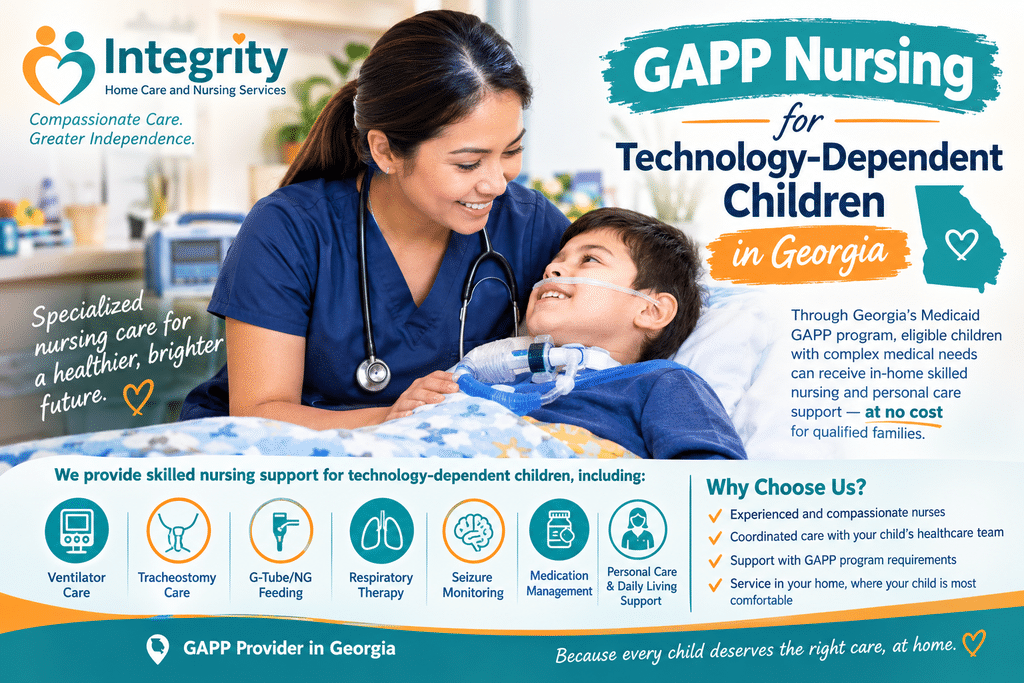
Caring for a child who depends on medical technology can be challenging for families. Children who need ventilators, feeding tubes, tracheostomy care, or other medical equipment may require ongoing support to manage their health and daily routines. Fortunately, GAPP nursing for technology-dependent children may help eligible Georgia families access medically necessary care in the comfort of their homes.
At Integrity Home Care and Nursing Services, we understand the importance of compassionate, reliable support for children with complex medical needs. Our goal is to help families explore available in-home care options and understand how Georgia’s Pediatric Program (GAPP) may support their child’s care needs.
What Is GAPP Nursing?
The Georgia Pediatric Program (GAPP) is a Medicaid program that provides eligible children with medically necessary in-home nursing and personal care services, according to program requirements and authorized care plans.
Through GAPP, qualifying children may receive support at home instead of relying solely on facility-based care. The program can help families manage their child’s daily care needs while maintaining familiar routines.
However, a child’s need for medical technology does not automatically qualify them for GAPP. Eligibility depends on the child’s medical condition, documented care needs, Medicaid requirements, and the program’s assessment and authorization process.
What Does It Mean to Be a Technology-Dependent Child?
A technology-dependent child relies on medical equipment to support essential body functions or manage a complex health condition. Depending on the child’s diagnosis, the equipment may help with breathing, nutrition, medication delivery, or other medical needs.
Examples of medical technologies used by some children include:
- Ventilators: Help children who cannot breathe adequately on their own.
- Tracheostomy equipment: Supports breathing through a surgically created opening in the neck.
- G-tubes and NG tubes: Provide nutrition, fluids, or prescribed medications when a child cannot safely or adequately take them by mouth.
- Oxygen equipment: Delivers supplemental oxygen when medically prescribed.
- Suction equipment: Helps clear secretions from the airway when needed.
- Seizure monitoring equipment: May help caregivers monitor certain seizure-related risks, depending on the child’s condition and prescribed care plan.
Not every child who uses one of these devices needs skilled nursing. Nevertheless, children who require frequent medical interventions, respiratory support, or complex daily care may benefit from an evaluation for appropriate in-home services.
How Can GAPP Nursing Help Technology-Dependent Children?
GAPP nursing may provide eligible children with medically necessary nursing support in their homes. The specific services depend on the child’s condition, provider qualifications, authorized care plan, and approved services.
1. Ventilator and Respiratory Support
Some technology-dependent children need assistance managing respiratory equipment and monitoring their breathing. When authorized and within the nurse’s scope of practice, skilled nursing may include respiratory assessments, prescribed treatments, airway management, and monitoring for changes that require medical attention.
2. Tracheostomy Care
Children with tracheostomies may need ongoing airway care to help maintain breathing and reduce complications. Depending on the child’s needs and authorized plan, nursing support may include tracheostomy care, secretion management, and monitoring for signs of respiratory distress.
3. Feeding Tube Management
Children who rely on G-tubes or NG tubes may need assistance with prescribed feeding routines and tube-related care. Qualified nursing professionals can provide appropriate support according to the child’s medical orders, care plan, and applicable practice requirements.
4. Medication Administration and Health Monitoring
Children with complex medical conditions may require scheduled medications and regular monitoring. Depending on the authorized services, nurses may administer prescribed medications, assess the child’s condition, document observations, and communicate concerns to the appropriate healthcare professionals.
5. Seizure and Neurological Monitoring
Some technology-dependent children also experience epilepsy or neurological conditions. Nursing care may involve observing seizure activity, following prescribed emergency protocols, administering medications when authorized, and monitoring the child’s response to treatment.
Through individualized care planning, qualified nursing professionals can help families manage complex care routines while supporting the child’s safety and comfort.
Who May Qualify for GAPP Nursing in Georgia?
Children with complex medical needs may be considered for GAPP when they meet the program’s eligibility requirements. Technology dependence alone does not guarantee approval.
Factors that may be considered include:
- The child’s current Medicaid eligibility.
- The child’s medical diagnosis and overall health condition.
- Medical documentation supporting the need for in-home services.
- The need for skilled nursing or qualifying personal care services.
- Physician orders and supporting clinical records, as required.
- Program assessments and authorization requirements.
Parents and guardians should discuss their child’s needs with the child’s healthcare provider and a qualified GAPP provider to understand the next steps.
How Can Parents Explore GAPP Nursing Services?
Families can take several practical steps to explore whether GAPP may be appropriate for their child.
- Speak with the child’s physician. Discuss the child’s medical equipment, daily care requirements, and need for ongoing nursing support.
- Gather medical documentation. Collect relevant medical records, treatment information, physician orders, and details about the child’s equipment and care routines.
- Confirm Medicaid eligibility. Review the child’s current Medicaid status and applicable program requirements.
- Contact a GAPP provider. Ask about the evaluation process, required documentation, and how the provider supports families seeking services.
- Complete the required assessment and authorization process. Services depend on the applicable program criteria and approval of medically necessary care.
The process and outcome vary according to each child’s circumstances. Therefore, families should confirm current requirements with Georgia Medicaid or an appropriate program representative.
Why Choose Integrity Home Care and Nursing Services?
Managing complex medical needs at home can place significant responsibilities on parents and caregivers. Having access to appropriate support can help families better understand their care options and coordinate services.
Integrity Home Care and Nursing Services helps Georgia families explore in-home care options for eligible children with medical needs. We recognize that every child has unique requirements, and families deserve respectful communication and guidance throughout the process.
Our team can help families understand GAPP-related services, discuss documentation requirements, and explore whether our agency may be an appropriate provider for their child’s needs. Actual services depend on eligibility, clinical requirements, staffing, and authorization.
Contact Integrity Home Care and Nursing Services
- Phone: 678-907-3454
- Website: integrityhomecareandnursing.com
Contact our team to discuss your child’s in-home care needs and learn more about available GAPP services in Georgia.