
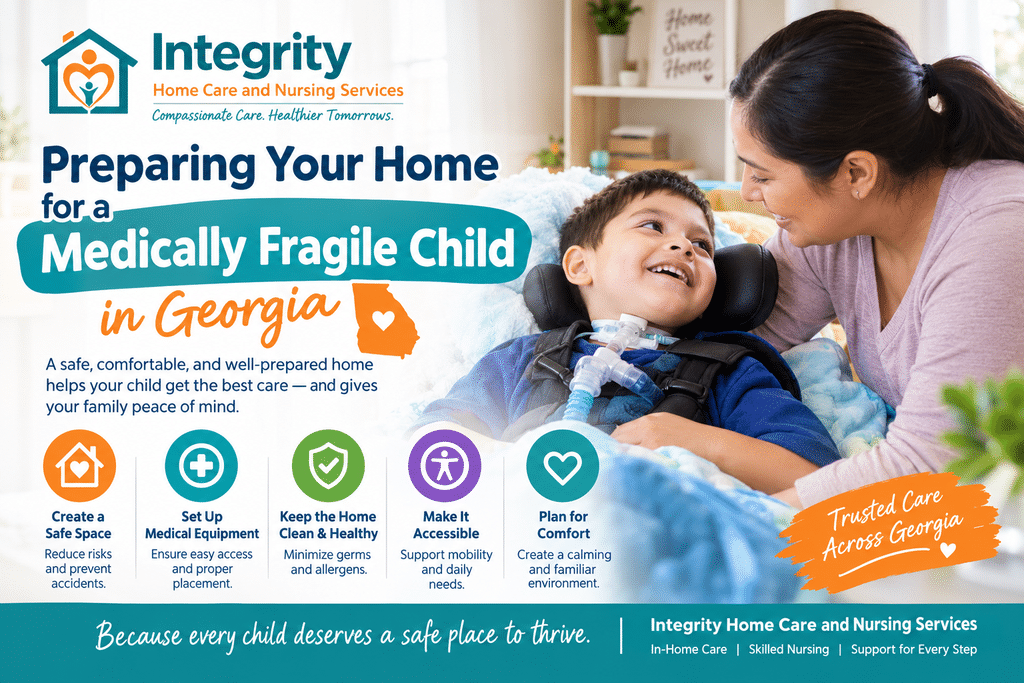
Bringing a medically fragile child home requires careful planning, preparation, and support. Whether your child needs skilled nursing, medical equipment, medication management, or assistance with daily activities, creating a safe and comfortable home environment can make a significant difference in their care and quality of life.
At Integrity Home Care and Nursing Services, we understand the unique challenges families face when caring for children with complex medical needs. With proper preparation and guidance from healthcare professionals, parents and caregivers can create a home environment that supports their child’s health, safety, comfort, and development.
Why Is Home Preparation Important for Medically Fragile Children?
Children with complex medical conditions may require specialized equipment, frequent monitoring, medication administration, or ongoing nursing care. Therefore, preparing your home before your child arrives can help reduce potential risks and make daily caregiving more manageable.
Additionally, a well-organized home allows caregivers and healthcare professionals to provide care more efficiently. It can also help children feel secure and comfortable in a familiar environment while receiving the support they need.
1. Create a Safe and Comfortable Care Area
First, identify a suitable space for your child’s daily care. Depending on your child’s medical needs, this area may include a hospital bed, medical supplies, monitoring equipment, and space for a nurse or caregiver to work safely.
When setting up the care area, consider the following:
- Keep walkways clear to allow safe movement and emergency access.
- Ensure adequate lighting for medication administration and nursing procedures.
- Choose a comfortable area with appropriate temperature and ventilation.
- Keep essential supplies organized and within the caregiver’s reach.
- Reduce unnecessary clutter, dust, and other potential environmental hazards.
Furthermore, consult your child’s healthcare team about any specific room requirements, especially if your child uses respiratory equipment or other medical devices.
2. Prepare for Medical Equipment and Supplies
Some medically fragile children depend on specialized equipment to support their daily health needs. For example, a child may use oxygen equipment, a ventilator, a feeding pump, a tracheostomy setup, or monitoring devices.
Before your child comes home, work with the healthcare team and equipment provider to confirm that the necessary equipment is available and functioning correctly.
Your preparation checklist should include:
- Confirming that prescribed equipment has been delivered and properly set up.
- Learning how to use the equipment according to professional instructions.
- Keeping necessary supplies organized and accessible.
- Understanding equipment alarms and knowing when to contact the healthcare team.
- Reviewing backup power options and emergency procedures when applicable.
- Posting important emergency contacts in an accessible location.
Most importantly, caregivers should receive appropriate training before operating specialized medical equipment. Never change prescribed settings or equipment procedures without guidance from the responsible healthcare professional.
3. Organize Medications and Medical Records
Medication management is another important part of preparing your home. Children with complex medical needs may take several medications at different times throughout the day.
To help prevent medication errors, maintain an updated medication list that includes each medication’s name, prescribed dose, schedule, and instructions. Store medications according to their labels and keep them secure from children and unauthorized individuals.
In addition, organize important medical documents, including:
- The child’s current care plan and medical instructions.
- Medication lists and allergy information.
- Healthcare provider contact information.
- Emergency action plans.
- Equipment instructions and relevant medical records.
Keep these documents accessible to authorized caregivers so they can quickly find essential information when needed.
4. Establish Infection Prevention Practices
Medically fragile children may have increased vulnerability to infections, depending on their underlying conditions and treatments. Therefore, maintaining good hygiene is essential.
To support a cleaner home environment:
- Wash hands before and after providing care.
- Clean and disinfect equipment according to the manufacturer’s instructions and healthcare team’s guidance.
- Follow proper procedures for handling feeding supplies and respiratory equipment.
- Keep frequently touched surfaces clean.
- Follow recommended precautions when household members are sick.
- Ask the child’s healthcare team about any additional infection prevention measures.
Additionally, make sure everyone involved in the child’s care understands the hygiene procedures required for that child’s specific medical needs.
5. Develop an Emergency Preparedness Plan
Although families hope emergencies never occur, preparing for unexpected situations is essential when caring for a medically fragile child at home.
Work with your child’s healthcare team to develop an individualized emergency plan. The plan should explain what caregivers need to do during equipment failure, breathing difficulties, power outages, or other medical emergencies relevant to the child’s condition.
Your emergency plan may include:
- Emergency numbers and healthcare provider contacts.
- Instructions for recognizing warning signs.
- Appropriate backup equipment and supplies.
- A plan for power interruptions if life-supporting equipment requires electricity.
- Emergency evacuation arrangements.
- Clear instructions about when to call 911.
Make sure all caregivers know where to find the plan and understand their responsibilities. If your child experiences severe breathing difficulties, becomes unresponsive, or shows other signs of a medical emergency, call 911 immediately and follow the emergency team’s instructions.
6. Prepare Family Members and Other Caregivers
Caring for a medically fragile child often involves several family members, nurses, and other caregivers. As a result, clear communication and consistent care practices are important.
Before care begins, identify who will handle daily routines, medication schedules, appointments, and emergency communication. Family members who provide hands-on care should receive training appropriate to their responsibilities.
Moreover, establish a communication routine for sharing relevant updates among family members and authorized healthcare professionals. A daily care log can help track medications, feeding, symptoms, appointments, and other information recommended by the care team.
Remember that caregivers should only perform medical tasks for which they have received appropriate training and authorization.
7. Make Space for Your Child’s Comfort and Development
While medical safety is a priority, your child’s emotional well-being and development also matter. A home should be more than a place for medical treatment; it should also be a place where children can learn, play, rest, and connect with family.
Whenever possible, include age-appropriate toys, books, familiar objects, and opportunities for interaction. Arrange the space to accommodate your child’s mobility, positioning, sensory needs, and prescribed medical equipment.
For children with limited mobility or developmental challenges, consult healthcare professionals about safe positioning, accessibility, and suitable activities.
Small adjustments can help your child feel included in family life while supporting comfort and independence to the extent appropriate for their condition.
8. Coordinate In-Home Nursing and Caregiver Support
Preparing your home is only one part of the process. Families may also need help understanding their child’s care plan, coordinating nursing services, and establishing routines for ongoing support.
Depending on the child’s medical needs and authorized services, in-home care may include skilled nursing, medication administration, health monitoring, feeding support, and assistance with other medically necessary tasks.
In Georgia, eligible children may qualify for services through the Georgia Pediatric Program (GAPP). GAPP provides authorized in-home nursing and personal care services for eligible children who meet program requirements. Eligibility and approved services depend on the child’s circumstances, medical documentation, and applicable program criteria.
Families should confirm the child’s eligibility, service authorization, and specific care arrangements with the appropriate healthcare professionals and program representatives.
Integrity Home Care and Nursing Services helps families navigate in-home care needs and understand available support options. Our goal is to help families work toward a safe, supportive home environment where children can receive appropriate care.
Home Preparation Checklist for Medically Fragile Children
Before bringing your child home or beginning a new care arrangement, review this checklist:
- Prepare a clean, accessible, and comfortable care area.
- Confirm that prescribed medical equipment is installed and working properly.
- Organize medications and essential medical supplies.
- Review the child’s care plan and emergency instructions.
- Establish handwashing and equipment-cleaning routines.
- Prepare backup supplies and power arrangements when needed.
- Train family members and authorized caregivers.
- Keep emergency contacts and medical records accessible.
- Coordinate appointments, nursing services, and follow-up care.
- Make room for rest, family interaction, and age-appropriate activities.
Because every child’s needs are different, review your checklist with the child’s healthcare team before implementing medical or safety arrangements.
How Integrity Home Care and Nursing Services Supports Families
Caring for a medically fragile child at home can feel overwhelming, particularly when families must manage specialized equipment, daily care routines, and ongoing medical needs. However, families do not have to navigate every step alone.
Integrity Home Care and Nursing Services supports families seeking in-home care options for children with complex medical needs in Georgia. Our team can help families understand available services and discuss potential next steps based on their circumstances and program eligibility.
Whether your child needs assistance with a care routine or may qualify for GAPP services, understanding your options is an important first step toward building a supportive home care environment.
Contact Integrity Home Care and Nursing Services
Phone: 678-907-3454
Website: https://integrityhomecareandnursing.com/
Reach out to discuss your child’s in-home care needs and learn more about available support options.
Frequently Asked Questions
How do I prepare my home for a medically fragile child?
Start by creating a clean and accessible care area, arranging prescribed medical equipment, organizing medications, and reviewing emergency procedures with your child’s healthcare team. Also, ensure that family members and caregivers receive appropriate training before providing care.
What equipment might a medically fragile child need at home?
Equipment varies according to the child’s condition and prescribed treatment. It may include oxygen equipment, a ventilator, a feeding pump, a pulse oximeter, a hospital bed, or other monitoring devices. Your child’s healthcare team will help determine the appropriate equipment and training requirements.
Can a nurse help care for a medically fragile child at home?
Yes. Depending on the child’s needs and authorized services, in-home nursing may provide skilled medical care, health monitoring, medication administration, and support with prescribed treatments. The specific services depend on the child’s care plan and applicable authorization requirements.
Can Georgia families receive GAPP services for medically fragile children?
Potentially. Georgia’s Pediatric Program (GAPP) provides authorized in-home nursing and personal care services for eligible children who meet program requirements. Families should confirm eligibility and medical necessity requirements with the appropriate program representatives and healthcare professionals.
How can parents prepare for a medical emergency at home?
Work with your child’s healthcare team to create a written emergency plan. Include emergency contacts, condition-specific warning signs, equipment backup arrangements, and instructions for seeking urgent medical assistance. Call 911 for life-threatening emergencies.
Final Thoughts
Preparing your home for a medically fragile child requires thoughtful planning, appropriate equipment, caregiver education, and coordination with healthcare professionals. By creating a safe environment and establishing clear care routines, families can better support their child’s comfort, safety, and daily needs.
With guidance from qualified healthcare professionals and access to appropriate in-home care services, parents can take meaningful steps toward managing their child’s care at home.
Integrity Home Care and Nursing Services is committed to helping Georgia families explore in-home care options for children with complex medical needs. Contact our team to learn more about available services and how to take the next step.