
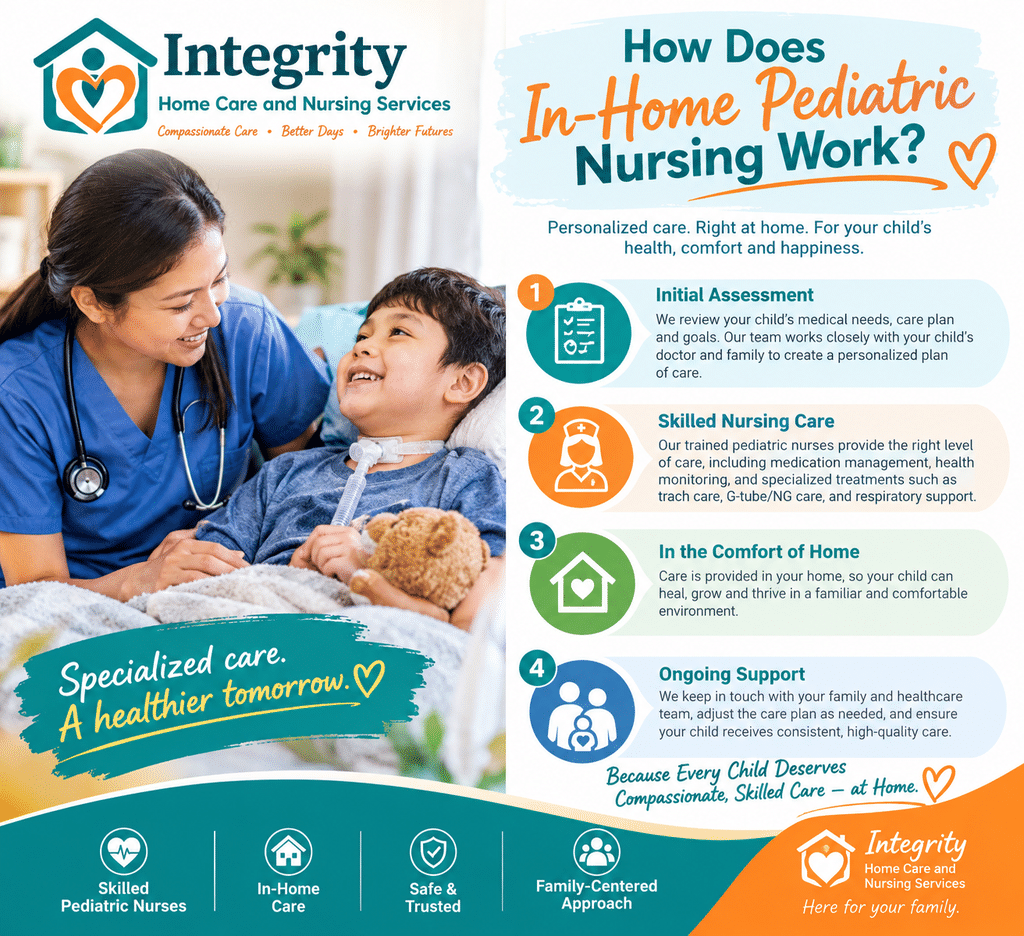
Introduction: Understanding In-Home Pediatric Nursing
Caring for a child with complex medical needs can be challenging for families. Parents often balance medical appointments, daily routines, medications, and other responsibilities while ensuring their child receives the care they need. Fortunately, in-home pediatric nursing allows eligible children to receive skilled nursing services in the comfort of their own homes.
At Integrity Home Care and Nursing Services, we understand the importance of providing compassionate, individualized support to medically fragile children and their families. Our goal is to help families understand their home nursing options and access appropriate care based on their child’s medical needs.
But how does in-home pediatric nursing work, and what can parents expect from the process? Let’s explore how this type of care supports children and their families in Georgia.
What Is In-Home Pediatric Nursing?
In-home pediatric nursing provides skilled nursing care to children who need medical attention and monitoring outside a hospital or other healthcare facility. Depending on the child’s condition, a qualified nurse may provide care for children with complex medical needs, chronic illnesses, disabilities, or conditions that require ongoing medical supervision.
Unlike general childcare, pediatric home nursing focuses on medical care, safety, and the child’s individual treatment plan. Nurses work with the child’s healthcare providers and family to help manage medical needs at home.
For example, in-home pediatric nursing may support children who require:
- Tracheostomy care and respiratory monitoring
- Ventilator support when ordered and provided by appropriately qualified personnel
- G-tube feeding and other prescribed feeding support
- Seizure monitoring and neurological care
- Medication administration as authorized
- Monitoring of vital signs and changes in health
- Care related to complex or chronic medical conditions
The specific services depend on the child’s condition, the nurse’s scope of practice, the prescribed care plan, and applicable service authorizations.
How Does In-Home Pediatric Nursing Work?
Families typically follow several steps when exploring in-home nursing services. The exact process may vary depending on the child’s medical needs, insurance coverage, and eligibility for available programs.
1. Assessing the Child’s Medical Needs
The process begins with understanding the child’s health condition and nursing requirements. The child’s healthcare provider evaluates the medical needs and determines whether skilled nursing care at home is appropriate.
The family may need to provide medical records, treatment information, physician orders, and other supporting documentation.
This information helps the care team understand the child’s needs and determine what type of nursing support may be appropriate.
2. Developing an Individualized Care Plan
After reviewing the child’s needs and the applicable requirements, the healthcare team establishes or coordinates an appropriate care plan.
The plan may outline:
- Required nursing services
- Medication and treatment instructions
- Feeding and respiratory care procedures
- Health monitoring requirements
- Emergency response instructions
- Communication with the child’s healthcare providers
An individualized plan helps the family and nursing team understand their responsibilities and maintain consistent care.
3. Coordinating Nursing Services
Once the necessary arrangements and authorizations are in place, the agency coordinates appropriate nursing services based on the child’s needs and the availability of qualified staff.
Depending on the care plan, services may involve a registered nurse (RN) or a licensed practical nurse (LPN) working within their respective scopes of practice.
The agency also coordinates scheduling and communicates with the family about the planned services.
4. Providing Skilled Nursing Care at Home
When nursing services begin, the nurse provides the authorized care according to the child’s care plan.
Depending on the child’s needs, this may include medication administration, respiratory support, feeding assistance, seizure monitoring, and observation for changes in health.
The nurse also documents care and communicates relevant concerns to the appropriate healthcare professionals and family members.
The goal is to help children receive appropriate medical care in a familiar environment while supporting their safety, comfort, and daily routines.
5. Monitoring Progress and Communicating With the Family
In-home pediatric nursing involves ongoing communication and observation. Nurses monitor the child’s condition within their responsibilities and report significant changes according to established procedures.
The care plan may need to be reviewed when the child’s condition changes or the healthcare provider recommends adjustments. Any changes to authorized services must follow the applicable clinical and program requirements.
Regular communication helps parents understand their child’s care and know when to contact the healthcare provider or seek emergency assistance.
Who Can Benefit From In-Home Pediatric Nursing?
In-home pediatric nursing may benefit children who need skilled medical care that can be safely provided at home.
These children may include those with:
- Neurological conditions, including epilepsy and seizure disorders
- Respiratory conditions requiring specialized support
- Congenital or genetic conditions
- Muscular dystrophy and other neuromuscular disorders
- Feeding difficulties requiring prescribed tube-feeding support
- Complex cardiac conditions
- Other chronic or medically complex conditions requiring skilled nursing
However, a diagnosis alone does not automatically qualify a child for home nursing services. Eligibility depends on the child’s individual medical needs, the applicable program or insurance requirements, and the necessary clinical documentation and authorization.
Can Georgia Families Receive In-Home Pediatric Nursing Through GAPP?
Yes. Eligible children in Georgia may be able to receive certain in-home skilled nursing services through the Georgia Pediatric Program (GAPP).
GAPP is a Georgia Medicaid program that supports qualifying medically fragile children under age 21 who meet applicable program requirements for authorized services.
Depending on the child’s circumstances, families may need to complete steps such as:
- Confirming the child’s Medicaid eligibility and applicable program requirements.
- Obtaining physician documentation and orders supporting medical necessity.
- Gathering the medical records and other required paperwork.
- Completing the appropriate assessment and authorization process.
- Coordinating services with an eligible provider after authorization.
The number of nursing hours and the specific services a child may receive depend on the child’s documented needs and the applicable authorization. Families should not assume that every child will qualify or receive a particular number of hours.
Integrity Home Care and Nursing Services can help families understand the home nursing process and explore whether GAPP may be an appropriate option. Final eligibility and service authorization decisions rest with the responsible program and its review process.
What Are the Benefits of In-Home Pediatric Nursing?
Receiving appropriate nursing care at home can offer several advantages for eligible children and their families.
A Familiar and Comfortable Environment
Children can receive authorized nursing care in familiar surroundings, which may help maintain their daily routines and provide greater comfort.
Individualized Medical Support
Nurses follow the child’s care plan and provide services suited to the child’s medical needs, rather than using a one-size-fits-all approach.
Support for Parents and Caregivers
Parents often manage demanding care routines. Professional nursing support can help families coordinate medical needs and better understand their child’s care.
Coordination With Healthcare Providers
Nurses can document observations and communicate relevant information to the child’s healthcare team, supporting continuity of care.
Greater Flexibility in Daily Routines
When services are authorized and appropriately scheduled, in-home nursing may help families coordinate care around the child’s routines, appointments, and other needs.
Although home nursing can provide valuable support, it does not replace emergency services, physician appointments, or other treatments the child may require.
Why Choose Integrity Home Care and Nursing Services?
At Integrity Home Care and Nursing Services, we recognize that every child has unique medical needs and every family has its own concerns and priorities.
Our focus is on helping families explore appropriate in-home care options and understand the steps involved in coordinating services for medically fragile children.
Families can contact our team to learn more about pediatric home nursing and the Georgia Pediatric Program (GAPP), including the documentation and authorization process.
We believe families deserve clear information, compassionate communication, and support as they navigate their child’s care options.
Frequently Asked Questions About In-Home Pediatric Nursing
1. How many hours of in-home pediatric nursing can a child receive?
The number of hours depends on the child’s medical needs, supporting documentation, program eligibility, and authorized services. A healthcare provider’s recommendation does not automatically guarantee approval for a specific number of hours.
2. Does a nurse come to the child’s home every day?
The schedule depends on the child’s approved care plan, authorized nursing hours, and staffing availability. Some children may need scheduled nursing visits or shifts, while others may require a different arrangement.
3. Can a child with private insurance qualify for GAPP?
A child with private insurance may still be able to qualify for GAPP if the child meets the applicable Medicaid and program requirements. Families should confirm their specific circumstances and coverage requirements before arranging services.
4. Do parents need to stay home while the nurse provides care?
Family responsibilities and supervision arrangements depend on the child’s needs, the care plan, applicable requirements, and the circumstances of the service. Families should discuss expectations directly with their provider.
5. Is in-home pediatric nursing free?
The cost depends on the child’s eligibility, coverage, and authorized services. Eligible children may receive covered services through GAPP without direct charges for those covered services when program requirements are met. Families should confirm coverage and any applicable financial responsibilities before services begin.
6. How can I get started with pediatric home nursing in Georgia?
Start by speaking with your child’s healthcare provider about medical needs and whether skilled nursing at home is appropriate. Then contact a qualified home care provider to discuss documentation, eligibility, assessments, and any required authorizations.
Get Started With In-Home Pediatric Nursing
Understanding how in-home pediatric nursing works can help families make informed decisions about their child’s healthcare. From assessing medical needs to coordinating nursing services and monitoring progress, each step helps establish appropriate support for children who need specialized care at home.
Integrity Home Care and Nursing Services is here to help Georgia families explore their pediatric home nursing options. Contact our team to learn more about in-home nursing services and whether the Georgia Pediatric Program may be an option for your child.
- Phone: 678-907-3454
- Website: integrityhomecareandnursing.com
Contact Integrity Home Care and Nursing Services today to discuss your child’s care needs and learn about the next steps.