
For medically fragile children, comfort and symptom support may be important at any point in an illness, not only near the end of life. When your child is facing complex health needs, pain, nausea, breathing discomfort, or disrupted sleep can affect daily life for the whole family. You may also be balancing appointments, decisions, and different medical opinions, sometimes with little time to prepare. Pediatric palliative care offers another layer of support for your child and family while your child continues receiving appropriate medical treatment.
What Is Pediatric Palliative Care?
Pediatric palliative care is specialized support focused on easing symptoms, improving quality of life, and helping families navigate the emotional and practical challenges of serious illness. It can begin at diagnosis and may be provided alongside treatment intended to cure, control, or stabilize a condition. It does not mean that treatment is stopping.
Palliative care is also not the same as hospice. Hospice is a particular form of comfort-focused care generally intended for people who meet end-of-life eligibility criteria. Palliative care can be appropriate much earlier and can continue alongside other treatments. Your child’s medical team can explain what services are available and appropriate in your situation.
The National Institute of Nursing Research describes palliative care as support for symptom relief, quality of life, and the emotional, social, and spiritual needs of patients and families.
How Comfort-Focused Care Can Help
Comfort-focused care starts with understanding your child’s unique needs and what matters to your family. It may help the care team notice symptoms, discuss options, and coordinate support around your child’s daily life.
Depending on your child’s situation, the palliative care team may help with:
- Pain: Discussing how pain is affecting your child and reviewing appropriate ways to relieve it.
- Nausea or other distressing symptoms: Helping identify possible causes and coordinating recommendations with your child’s treating clinicians.
- Breathing discomfort: Supporting communication with respiratory or other specialists about your child’s symptoms and care plan.
- Sleep and rest: Exploring how symptoms or treatment routines may be affecting your child’s sleep and comfort.
- Emotional and practical concerns: Helping your family talk through worries, decisions, and available support.
A palliative care clinician does not replace your child’s primary care physician, specialists, or existing nurses. The goal is to work alongside them, with your family’s priorities at the center. Never start, stop, or change your child’s treatment or medication without direction from the appropriate clinician.
Who May Be Part of the Palliative Care Team?
Pediatric palliative care is often provided by an interdisciplinary team. Depending on the program and your child’s needs, the team may include:
- A physician, who helps guide clinical discussions and coordinate with your child’s specialists.
- A nurse, who may help monitor symptoms, explain care recommendations, and support communication.
- A social worker, who can help your family navigate emotional, practical, and community-support needs.
- A chaplain or spiritual care professional, if your family would like support with spiritual or meaning-related concerns.

Your child’s existing team remains important. A palliative care clinician may coordinate with your child’s neurologist, primary care physician, or other specialists, as well as your home nursing team. The specific team and available services vary by location and program.
The American Academy of Pediatrics emphasizes communication and collaboration with families as part of care for children with serious illness. You can read its guidance for pediatric care.
Communication and Support for Your Family
Good communication gives you space to share what you are noticing and to understand the options being discussed. You can ask the team to explain unfamiliar terms, clarify who to call with a concern, or help coordinate information across your child’s providers.
You may also ask for conversations that include your child in a way that is appropriate for their age, communication style, and preferences. Your family’s cultural, spiritual, and personal values matter, too. Palliative care is meant to support your decisions, not make them for you.

How Georgia Parents Can Ask for a Referral
If you think comfort-focused support could help, you can raise the topic with your child’s primary care physician, specialist, or hospital team. You might say:
“Could you tell us whether pediatric palliative care is available for our child, and whether a referral may be appropriate?”
You can also ask:
- What symptoms or concerns could the palliative care team help with?
- Can palliative care be provided while my child continues current treatment?
- How will this team coordinate with my child’s specialists and home nursing?
- What services are available in our area, and how are they covered?
- Who should we call with questions between appointments?
If a referral is not available where you receive care, ask your child’s clinician what other supportive services may be appropriate.
How Home Nursing Can Fit Into Your Child’s Support
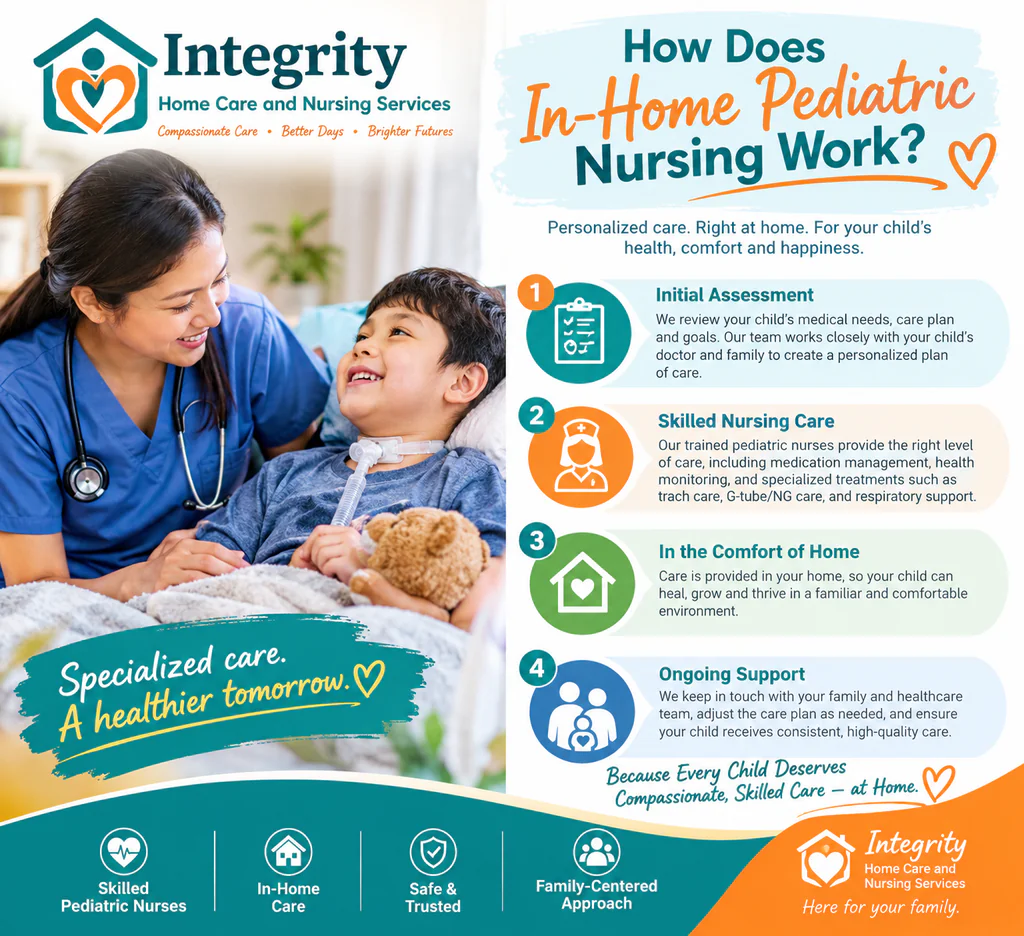
Home nursing and palliative care have different roles, but they may work together. A pediatric nurse can provide skilled support based on the child’s needs, physician orders, scope of practice, and any applicable service authorization. If your child receives care through Georgia’s Pediatric Program, a GAPP nurse may provide authorized in-home services; eligibility and covered care are determined through the program.
Integrity Home Care and Nursing Agency is a family-owned home care agency in Georgia supporting children and families. Our team can discuss in-home pediatric nursing and help coordinate with your child’s care team. Learn more about our pediatric skilled nursing services and Georgia Pediatric Program (GAPP).
We provide a FREE in-home RN assessment to help understand your family’s care needs and develop a personalized care plan. Our caregivers undergo a rigorous screening process, including interviews, credential checks, background checks, and reference checks. An RN is on call 24/7. There are no contracts. You pay only for services provided.
We serve families throughout all 129 Georgia counties, including Gwinnett and DeKalb counties. Our commitment is to be the #1 homecare choice for Georgia families through compassionate, professional, personalized support.
If you are searching for a “nurse for hire,” start by discussing your child’s clinical needs and available coverage with your care team and prospective provider. Home nursing does not replace your child’s palliative care clinicians or specialists, but it may be one part of a coordinated plan.

Frequently Asked Questions
1. Does pediatric palliative care mean my child is dying?
No. Palliative care can begin at diagnosis and may be offered alongside treatment intended to cure, control, or stabilize your child’s condition. Ask your child’s clinician what the term means for your specific situation.
2. Is palliative care the same as hospice?
No. They are related but not interchangeable. Palliative care can be provided earlier and alongside other treatments. Hospice generally serves people who meet end-of-life eligibility criteria. Availability and eligibility should be discussed with your child’s care team.
3. What symptoms can pediatric palliative care help address?
The team may help address concerns such as pain, nausea, breathing discomfort, and sleep difficulties. The specific support depends on your child’s needs and the services available through the care program.
4. Will palliative care replace my child’s specialists or home nurse?
No. Palliative care is intended to work with your child’s existing clinicians. Ask how the team will coordinate with specialists, your child’s primary care physician, and any home nursing providers.
5. How can I request a pediatric palliative care referral in Georgia?
Ask your child’s primary care physician, specialist, or hospital team whether a pediatric palliative care consultation is available and appropriate. They can explain the referral process and options in your area.
A Supportive Next Step for Your Family
You do not have to wait for a crisis to ask about comfort-focused support. A conversation with your child’s medical team can help clarify what pediatric palliative care offers and how it may fit alongside your child’s current care.
To learn more about in-home pediatric nursing, give Integrity Home Care and Nursing Agency a call at 678-907-3454, email kenny@integrityhomecareandnursing.com, or visit www.integrityhomecareandnursing.com. We welcome your questions and can discuss a FREE in-home RN assessment.
Educational Disclaimer
This article is for general educational purposes only and is not medical advice, diagnosis, or treatment. Every child’s needs are unique. Always follow your child’s care team’s guidance, and speak with your child’s physician or qualified clinician about symptoms, referrals, and care decisions.
SEO and Publishing Package
SEO title: Pediatric Palliative Care for Children in Georgia | RN Corner
Meta description: Learn how pediatric palliative care supports comfort and quality of life for medically fragile children, and how Georgia parents can ask about a referral.
Outline:
- What pediatric palliative care is, and how it differs from hospice
- Symptom support and quality of life
- Members of the palliative care team
- Communication and family support
- Asking for a referral in Georgia
- Coordinating home nursing with the care team
- Frequently asked questions
Searchable keywords: pediatric palliative care, palliative care for children, medically fragile children, pediatric nursing, pediatric nurse, GAPP nurse, home care agency in Georgia, nurse for hire, Georgia pediatric home nursing, comfort-focused care for children
Internal links:
- Georgia Pediatric Program (GAPP)
- In-home pediatric nursing
- Integrity Home Care and Nursing Agency homepage
Sources:
- National Institute of Nursing Research: Palliative Care for Children
- American Academy of Pediatrics: Guidance for Pediatric End-of-Life Care
- HealthyChildren.org: AAP on open communication and collaboration with families
Facebook post:
Pediatric palliative care is not the same as hospice, and it does not mean your child’s treatment is stopping. It can begin alongside other care to help address symptoms, support quality of life, and improve communication among your family and your child’s care team. Read our RN Corner guide for Georgia parents: www.integrityhomecareandnursing.com. Call 678-907-3454 to learn about our in-home pediatric nursing support.
Instagram caption:
Comfort-focused care can be part of your child’s support while other treatment continues. Learn what pediatric palliative care is, how it may help, and how to ask your child’s care team about a referral.
#MedicallyFragile #PediatricNursing #GAPP #IntegrityHomeCare #HomeCareGeorgia
Google Business post:
Georgia parents: pediatric palliative care can support comfort and quality of life alongside other treatment. Read our RN Corner guide, then call Integrity at 678-907-3454 to learn about personalized in-home pediatric nursing and a FREE in-home RN assessment.
Newsletter blurb:
This RN Corner guide explains pediatric palliative care, how it differs from hospice, and how it can support symptom relief and family communication while a child continues other treatment. Find practical questions to ask your child’s care team and learn how home nursing may fit into a coordinated plan.
Video script:
“Pediatric palliative care can begin at diagnosis and may be provided alongside other treatment. It focuses on comfort, symptom support, quality of life, and communication for your child and family. It is not the same as hospice. Ask your child’s physician or specialist whether a palliative care referral may be appropriate. Integrity Home Care and Nursing Agency also offers personalized in-home pediatric nursing support across Georgia. Call 678-907-3454 to learn more.”
Suggested images:
- Hero: family and pediatric nurse sharing a calm moment at home.
- Pediatric home nursing illustration from Integrity’s website.
- Interdisciplinary team meeting with a parent.
- Child relaxing at home with family support.
- Parent discussing care options with a pediatric clinician.
Share This
Share this guide with a Georgia parent who wants to understand pediatric palliative care and how comfort-focused support may fit alongside a child’s existing care. Every family deserves clear information and compassionate support as they explore options for their child.
#MedicallyFragile #PediatricNursing #GAPP #IntegrityHomeCare #HomeCareGeorgia